



Teeth Whitening Explained: Your Options and What to Expect
Teeth whitening is one of the most requested cosmetic treatments, and it is easy to see why: a brighter smile can be a real confidence boost. But with shelves full of whitening products and plenty of online advice, it can be hard to know what actually works, what is safe, and what to realistically expect. Here is a straightforward guide to the main options and how they differ.
Why teeth discolour
Teeth can darken or yellow for many reasons. Surface staining is often caused by coffee, tea, red wine, and smoking, and builds up gradually over time. Teeth also naturally darken with age as the enamel thins and the layer beneath shows through. Some discolouration comes from within the tooth, which behaves differently to surface staining and does not respond to the same treatments. Understanding the cause matters, because it shapes which approach is likely to help, and a dentist can identify which type you have.
Professional in-chair whitening
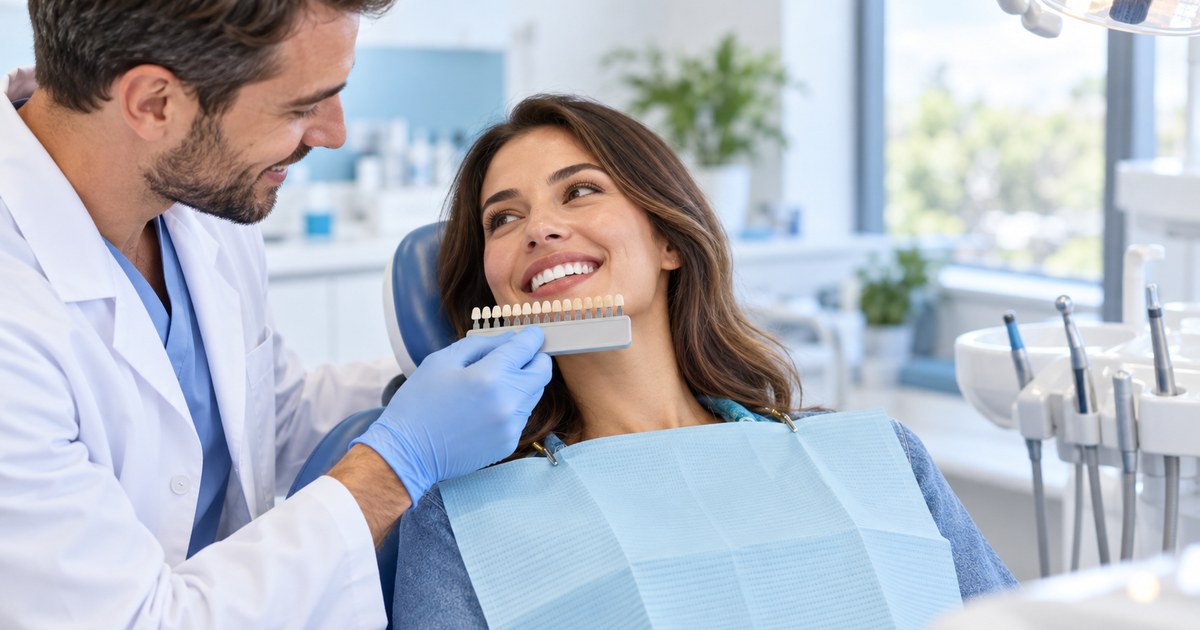
In-chair whitening is carried out by a dental professional using a stronger whitening gel than you can buy over the counter, with the gums protected during treatment. It is the fastest option and is done under supervision, which helps manage sensitivity. Because a dentist assesses your teeth first, they can also check that the discolouration is the type likely to respond and that your teeth and gums are healthy enough for treatment.
Take-home professional kits
Many practices also offer custom take-home kits, with trays made to fit your teeth and a professional-grade gel used over a couple of weeks. These work more gradually than in-chair treatment but can achieve a similar outcome, and some people prefer the convenience of whitening at home. Because the trays are custom-made, the gel is applied evenly and contact with the gums is minimised, which helps with comfort.
Over-the-counter products
Supermarket and pharmacy whitening toothpastes, strips and kits are the most affordable option and can help with mild surface staining. They are weaker than professional treatments, so results are more limited, and ill-fitting one-size trays can irritate the gums. They suit minor touch-ups more than significant colour change. It is sensible to have a dental check before starting, as whitening works best on healthy teeth and does not change the colour of fillings, crowns or veneers.
Is whitening safe?
Used appropriately, professional whitening is well established. The most common side effect is temporary sensitivity, which usually settles within a few days, and a professional approach helps keep this to a minimum. Whitening is not suitable for everyone or every situation, which is why an assessment first is worthwhile. Results vary from person to person depending on the starting shade and the cause of the discolouration, and whitening is not permanent, so occasional top-ups help maintain the effect over time.
Making a lasting difference
Whatever option you choose, a few habits help the result last: cutting back on staining foods and drinks, rinsing with water after them, not smoking, and keeping up regular brushing and professional cleans. A professional clean alone can remove a surprising amount of surface staining and is often a sensible first step before any whitening, and it may be all some people need.
If you are considering brightening your smile, the best starting point is a conversation with your dentist about which approach suits your teeth and goals. An overview of the options for teeth whitening at Sandgate Family Dental can help you understand what is involved before you decide. A little professional guidance goes a long way towards a result that is both safe and worth the investment.